Feeling sleepy? It’s time for bed!

The Manchester AE Soc lecture WILL go ahead this Monday (5th March).  7:30pm Manchester Conference Centre, Sackville Street, Manchester, M1 3BB. We look forward to seeing you!

Manon Schutz – ‘To die, to sleep’ — The Meaning of Beds in Ancient Egypt

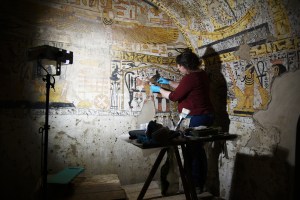
Photo: RBP

Bed of Hetepheres

The bed is a piece of furniture which everyone in modern day England uses or at least knows. However, as it seems so familiar to us, we tend to project our own understanding of beds and the ideas related to them—especially that of the nightly sleep—to beds in other cultures. In the case of Egyptian beds, however, one might wonder whether it is legitimate to compare objects that are not only geographically, but also chronologically apart, even though their form is similar to our modern counterparts. Furthermore, it is noteworthy that all the beds known to us stem from tombs, not the domestic area. Thus, the aim of this talk is to analyse the function of beds in the funerary context of ancient Egypt and their role as connecting link between sleep and death.

Manon is a doctoral candidate and Clarendon scholar at Mansfield College, University of Oxford. In her thesis ‘Sleep, Beds, and Death in Ancient Egypt’, she is analysing the function of the bed in the funerary context of ancient Egypt from Predynastic times to the Graeco-Roman Period, especially in its role as protector and guarantor of rebirth. Inher Magister Artium thesis, which she completed at the University of Trier (Germany), as well as her Master of Studies thesis for the University of Oxford, she analysed coffins from the Roman Period. She was also involved in the publication of the Egyptian collection housed in the Musée National d’Histoire et d’Art in Luxembourg.

Ramesses II Study Day – Now 24th March!

NOW BEING HELD ON SATURDAY 24th MARCH

(Postponed from 3rd March due to bad weather and rail strikes)

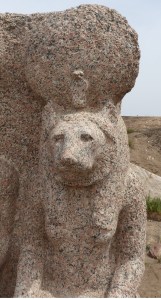
Photo: RBP

Ramesses II at the British Museum

Ramesses the Great – Pharaoh of the Exodus?

with Michael Tunnicliffe & Sarah Griffiths

Ramesses II was one of the greatest and most powerful of the pharaohs. During his 67 year reign he built more temples, erected more colossal statues and sired more children than any other Egyptian king. His inscriptions tell us about his great victories over the enemies of Egypt: the Hittites, the Nubians and the Libyans. He expanded Egypt’s empire, secured the borders and established the first major peace treaty in history. He was revered by later kings, and became the ‘Ozymandias’ of classical legend.

But was Ramesses the pharaoh of the Exodus? Did he enslave the Israelites and suffer the ten plagues of the Bible? Can we believe the king’s propaganda – does Ramesses “the Great” truly live up to his name?

Join Michael Tunnicliffe and Sarah Griffiths as they investigate, using evidence from Biblical and Egyptian sources to explore the life and legacy of Ramesses II.

Dayschool: Saturday 3rd March 2018   Time: 10:30am – 4:30pm

Details here:

Magic and Art this Monday!

This Monday Campbell Price presents our annual Bob Partridge Egyptology Lecture, in memory of our late Chairman.

Photo: RBP

Cat in the Marshes, Tomb of Nebamun

Join us to explore Artisans as Ritualists in Ancient Egypt

Artisans, particularly those engaged in producing sculpture, held an especially important place in Ancient Egyptian society. This lecture explores the ‘magic’ of artistic production and traces the evidence of some artisans, who often left their mark on works they created or used their access to skills and resources to make very special objects for themselves.

Monday 12th February from 7:30pm Manchester Conference Centre / Pendulum Hotel, Sackville Street, Manchester, M1 3BB

Life in Deir el-Medina: Bookings now being taken!

We are now taking bookings for the upcoming joint half-study day on Saturday 7th April. MAES and the Egypt Exploration Society present two lectures by EES Director Cédric Gobeil about his excavations at Deir el-Medina and his research on the mummy of the Deir el-Medina tattooed lady.

This is in association with the Manchester Museum – the lectures take place in the museum’s Kanaris Lecture Theatre. Tickets £20 each.

Photo: Cedric Gobeil

Deir el-Medina Fieldwork

To book click here!


Delta Digs Study Day! Saturday 17th March.

Statue of Wadjet at Buto. Photo: Penny Wilson

Booking is now open for our annual Manchester Ancient Egypt Society study day. This year we present “Delta Digs” with Penny Wilson, Joanne Rowland and Rosalie David.

Join us   for a fascinating day of exploration of the Delta and its history, including the rise of Sais to Royal Capital, Predynastic settlements at Merimde Beni Salama, the Tanis treasures and Graeco-Roman “Boom & Bust”.

9:30am – 4:30pm at the Longfield Suite, Prestwich. Details and bookings here:


Ramesses the Great: Pharaoh of the Exodus?

Photo: RBP

Ramesses II at the British Museum

Join MAES members Sarah Griffiths & Michael Tunnicliffe to explore the Egyptian and Biblical evidence for the life, reign and legacy of one of Egypt’s greatest kings: Ramesses II.

Saturday 3rd March 10:30am – 4:30pm at the Cross Street Chapel, Cross Street, Manchester, M2 1NL.

All welcome. For more details visit the MANCENT site.

The Magic of Artistic Production!

Campbell Price is giving our annual Bob Partridge Egyptology Lecture, in memory of our late Chairman, on Monday 12th February.

Artisans, particularly those engaged in producing sculpture, held an especially important place in Ancient Egyptian society. This lecture explores the ‘magic’ of artistic production and traces the evidence of some artisans, who often left their mark on works they created or used their access to skills and resources to make very special objects for themselves.

Campbell Price is Curator of Egypt and Sudan at Manchester Museum, one of the UK’s largest Egyptology collections. He undertook his BA, MA, and PhD in Egyptology at the University of Liverpool, where he is now an Honorary Research Fellow. He has published widely on ancient Egyptian material culture, most recently Pocket Museum: Ancient Egypt (Thames and Hudson, 2018). Campbell has lectured widely throughout the UK, and internationally.

Manchester Conference Centre / Pendulum Hotel, Sackville Street, Manchester, M1 3BB. 7:30pm.

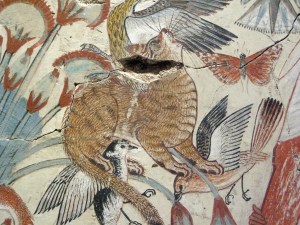
Photo: RBP

Cat in the Marshes, Tomb of Nebamun

Egypt, Crete & the Levant this Monday!

Our first 2018 MAES meeting is next Monday, 8th January. We welcome back Dylan Bickerstaffe who will be presenting his lecture ” Separated at Birth? Egypt, Crete and the Levant”.                              

Why were bulls, vultures, and snakes such prominent symbols in the cultures of ancient Egypt and Minoan Crete? The Egyptian king was a ‘mighty bull’, and there were cults in Egypt for the Apis, Buchis, and Mnevis bull. In Minoan Crete votive bull figurines were placed in shrines; numerous images depicted scenes of bull leaping; and several myths and legends focused on bulls – not least the mighty man-bull, or Minotaur. But this theme may also be found in extremely ancient cultures in the Levant, Mesopotamia, and Anatolia – and here, too, were the common symbols of vultures, and snakes. Images of totemic animals are just one of several artistic themes which we will see paralleled in these ancient cultures.

Come and join us Monday from 7:30pm at the Manchester Conference Centre. Visitors welcome!