This Monday we welcome Sara Aly to the Manchester AE Society zoom lecture! All welcome. Free to MAES members (you should by now have received an email). Guests welcome on Eventbrite here:
11 May: Sara Aly
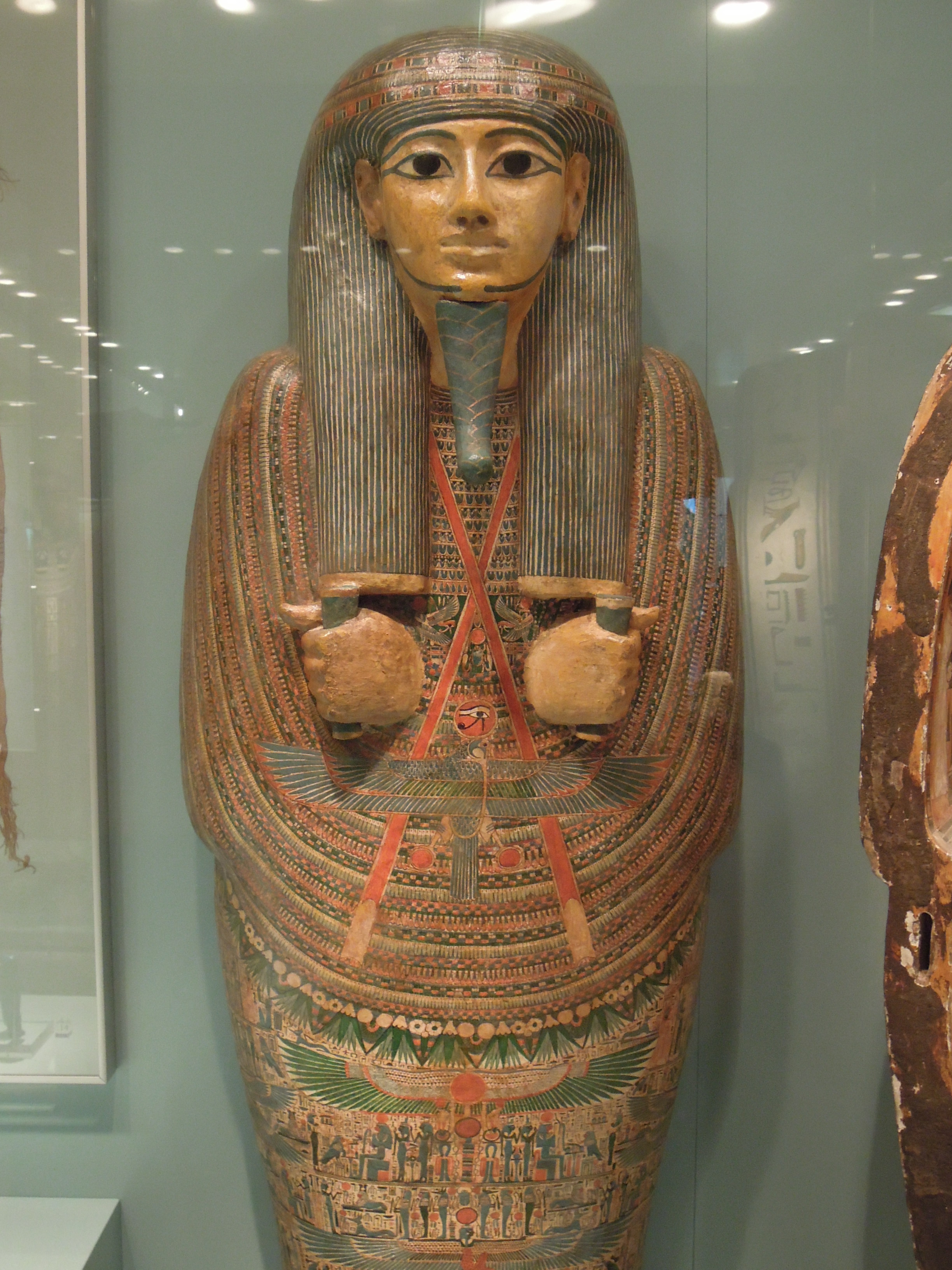
Coffins for Eternity: Houses of the Afterlife
One of the most important aspects of Ancient Egyptian culture was death. With it came resurrection into the afterlife, where people would reach eternal existence. They had to properly prepare for death and resurrection through magical rituals and offerings to the gods. There were also special requirements for the place where their bodies would rest, so they built tombs to preserve them. These were furnished with copious funerary equipment, of which coffins were the most important. Coffins enabled the protection of the body, allowing the spirit of the deceased to continue its existence in the afterlife. Seen as a house for the mummy, coffins undergone remarkable development, both in form and style, reflecting the evolution of religious and cultural beliefs. However, despite being an integral element of royal and private funerary assemblages, they were beyond the reach of the lower strata of society. Due to the wide range of informative features, coffins offer today a valuable source for Egyptologists to investigate many aspects of ancient Egyptian civilisation.
Sara’s research focuses on the circulation of illicitly sourced Egyptian artefacts on the art market, following a collaboration with the Circulating Artefacts project at the British Museum five years ago.. Her MA dissertation at the University of Manchester (2023) examined upper coffin fragments appearing on the art market. Since 2023, she has been a member of the Franco-Egyptian Archaeological Mission of Western Thebes, working at the Ramesseum, where she analyses coffin and cartonnage fragments. From 2023 to 2025 she worked as an Art Market Expert at the British Museum helping to identify and recover missing items from the museum’s collection. Now based at the Griffith Institute, Sara is now studying the archival material documentation of Egyptian objects in the possession of antiquities dealers and collectors between the 1930s and the 1980s.

