Study Days

In addition to our monthly lectures we also run two online study days each year.  These are usually held on a Saturday in spring and autumn, and are dedicated to a particular theme or area of interest.

Guests via Eventbrite. MAES members via booking form (emailed to you).


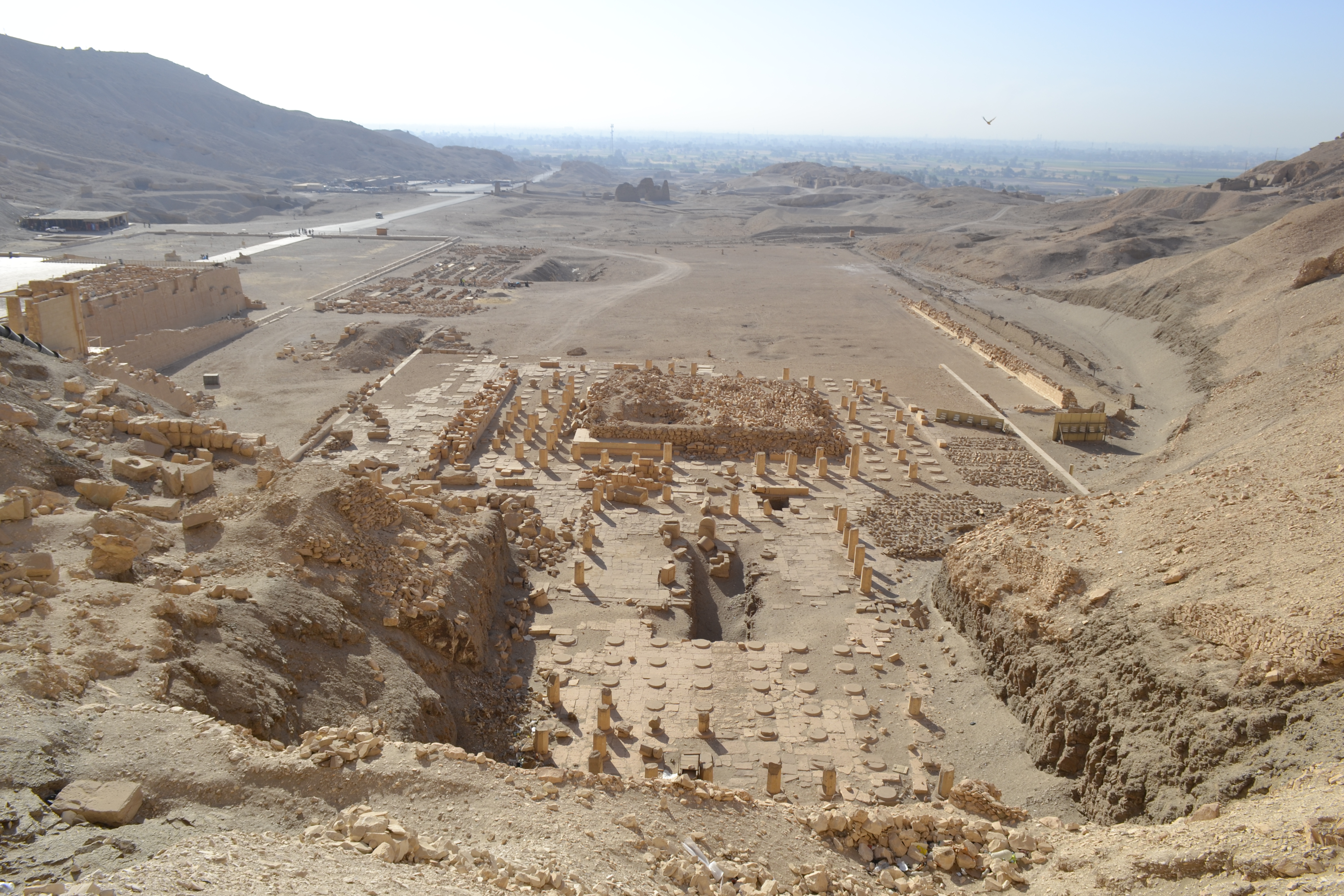
A study day exploring the history of the Middle Kingdom, and recent excavations at Deir el-Bahri, Abydos and the fortress site of Uronarti in north Sudan.

Wolfram Grajetzki: The History of the Middle Kingdom

MMA

The Middle Kingdom (Eleventh to Thirteenth Dynasty, c.2000-1700 BC) was a classical period of art, history and literature. With almost 200 years in power, the Twelfth Dynasty was one of the strongest ever to rule on the banks of the Nile: some of its kings were later worshipped as gods, and were made famous by classical Greek authors. The Dynasty finished with Sobeknefru, the very first woman on the Egyptian throne. Although the picture is broken, the last two hundred years of excavation have revealed much of the splendour of the period. This talk presents the evidence for the culture and history of both central and provincial Egypt at the time, revealing the wealth and originality of the country in the period.  

Patryk Chudzik: Egyptian art at the dawn of the Middle Kingdom

MMA

The reign of Nebhepetra Mentuhotep II is one of the most historically significant periods of ancient Egypt. After more than a hundred years of civil war, the king reunited the country, ushering in a new era of political and cultural prosperity, which we now refer to as the Middle Kingdom. His residence, Thebes, became the capital of Egypt for the first time in history, bringing the cultural patterns of the Old Kingdom to the south. Today, we can see manifestations of this phenomenon on the walls of temples and tombs, where a distinction can be drawn between the pre-unification Theban style and the post-reunification Memphite style. Therefore, the aim of these lectures will be to discuss the changes taking place in Egyptian art during the reign of Mentuhotep II, emphasising their historical and cultural background.

Christian Knoblauch: Cult and community at Abydos in the early Middle Kingdom. Results of the University of Michigan’s Middle Cemetery Project

C Knoblauch

Drawing on 25 years of excavation by University of Michigan under the directorship of Professor Janet Richards, Christian will explore how art, architecture and ritual were harnessed by the community at Abydos to negotiate a period of far- reaching political and social change.

Luc Gabode: The 11th and 12th Dynasties at Karnak

L Gabold

Taking us back to the dawn of the Temple of Karnak, Luc will explore the development of the temple complex in the Middle Kingdom. From primitive garden to Senusret I’s ‘Great Castle of Amun’, passing through phases of building by Intef II, and Mentuhotep II & III, the lecture will reveal the political and theological aspects of the emerging cult of Amun.

Wolfram Grajetzki (University College London, Honorary Research Fellow) studied at Free University of Berlin, and gained his Doctor of Philosophy at the Humboldt University of Berlin. He has excavated in Egypt and also in Pakistan and taught Egyptology in Berlin, London and Pisa. Wolfram is the author of many research papers and popular articles and books on the Egyptian Middle Kingdom, in particular on administration, and burial customs. He was a researcher on several projects, including Digital Egypt for Universities (2000 to 2003, UCL, London).

Dr Patryk Chudzik is an Assistant Professor at the Polish Centre of Mediterranean Archaeology of the University of Warsaw. He studied Prehistory, as well as Oriental and Classical Archaeology at the universities in Poznań and Wrocław. He received his PhD on the topography and architecture of the Theban necropolis in the Middle Kingdom. Currently, he combines his research interests in Middle Kingdom culture and the history of the Theban necropolis with his field projects at the temple of Hatshepsut at Deir el-Bahri and the Middle Kingdom tombs of North Asasif.

Christian Knoblauch is assistant director of the University of Michigan’s AMC Project and co-director of the Uronarti Regional Archaeological Project. He specialises in the archaeology of Egypt and Nubia in the 3rd-2nd Millennium BCE. He is Senior Lecturer in Egyptian Material Culture at Swansea University.


Click here to find out more about the rest of the MAES programme!