Same-sex desire in Ancient Egypt.

Our next meeting – open to all! This Monday online from 7:30pm. A fascinating lecture with a saucy title!
Roland Enmarch: How beautiful are thy buttocks! Same-sex desire in Ancient Egypt.
Although there is little evidence that the Ancient Egyptians conceptualised human beings as belonging to discrete groups based on their sexual preferences, there is a comparatively rich set of sources that attest the existence of same-sex sexual activity in pharaonic times. These include the realms of Egyptian mythology, where the male gods Horus and Seth are described in many different sources as having sex with each other. Same-sex activity is also mentioned in texts that the Egyptians took to the grave with them such as the Book of the Dead. In Ancient Egyptian literature, King Neferkare scandalously makes nightly visits to the house of his General Sasenet, while the sage Ptahhotep sternly counsels men not to have sex with a ‘womanish boy’ – which rather implies that there must have been a lot of it about.
Egyptian societal ideologies were heteronormative, and being the passive partner in male same-sex activity was specifically denigrated. It is also clear that sometimes man-on-man sex was conceptualised as a form of aggression/ humiliation. Notwithstanding this, there are a number of sources which instead hint at the expression of same-sex sexual desire, and which suggest the possibility of enjoyment from its fulfilment. A good example of this is the world’s oldest surviving chat-up line, which forms part of the title of this lecture.
Free for MAES members (you’ll get an email link). Guests £5 via Eventbrite:

What’s In A Name? MAES Monday 8th February

Our next Zoom meeting is on Monday 8th February and we welcome back the charismatic Glenn Godenho!

Glenn Godenho: What’s in a Name? Patterns of People at the End of the Old Kingdom.

Djau, Ibi, Khu, Kheti – all names that tend to recur in key locations at the end of the Old Kingdom. Of course, same and similar names do not at all imply a collective of blood-relatives running the administrative machine at provincial centres. However, a closer look at the extant evidence starts to show patterns of provincial rulership that may help us to better understand the balance of power as the Old Kingdom draws to a close.

Dr Glenn Godenho began Egyptological training at Birkbeck College, London, and then studied for BA, MA and PhD at the University of Liverpool, where he now works as a Senior Lecturer in Egyptology and Academic Director of the Institution’s Continuing Education Department. He is part of a Liverpool-Bonn First Intermediate Period research group that aims to bring a number of related projects together from both institutions.

Free to members; £5 guests via Eventbrite here:

The Rise & Collapse of the Nubian Kingdom of Meroe!

Happy New Year! The Manchester AE Society’s next online lecture is next Monday, kicking off 2021 with a fascinating glimpse into Nubian history! Everyone welcome – details below.
Members will receive a free link – guests can book a place on Eventbrite (£5) here: https://www.eventbrite.co.uk/myevent?eid=132565816927
Monday 11th January 2021 Zoom Lecture
“Doors” open 7:30pm; lecture start 8pm.
Dr Iwona Kozieradzka-Ogunmakin Beyond the Pyramids: New Insights into the Rise and Collapse of the Kingdom of Meroe, Sudan.
The Kushite Kingdom of Meroe (c. 300 BC – AD 350) occupied a vast territory of present-day Sudan and the southern fringes of Egypt. The kingdom played a key role in the region facilitating trade between the Graeco-Roman world and African states and beyond, and its position was further strengthened by iron production that centred in the region around the capital city of Meroe, presently known for its necropolis with numerous royal pyramids. However, after several centuries, this once powerful and prosperous kingdom collapsed, and the circumstances surrounding its demise remain unclear and open to speculation. This lecture will present the circumstances surrounding the formation of the Meroitic kingdom and discuss the existing theories and new evidence pertaining to its sudden collapse.

Milk and Romans! Members Research This Monday!

This Monday – two exciting talks from MAES Members based on their own research!
Lesley Easterman asks “Did ancient Egyptians Drink Milk?” and in a change to the previously advertised talk, Michael Tunnicliffe looks at “Roman Egypt in the Second Century”

Monday 7:30pm via Zoom.

Free to MAES members. Guests welcome to join us via Eventbrite.

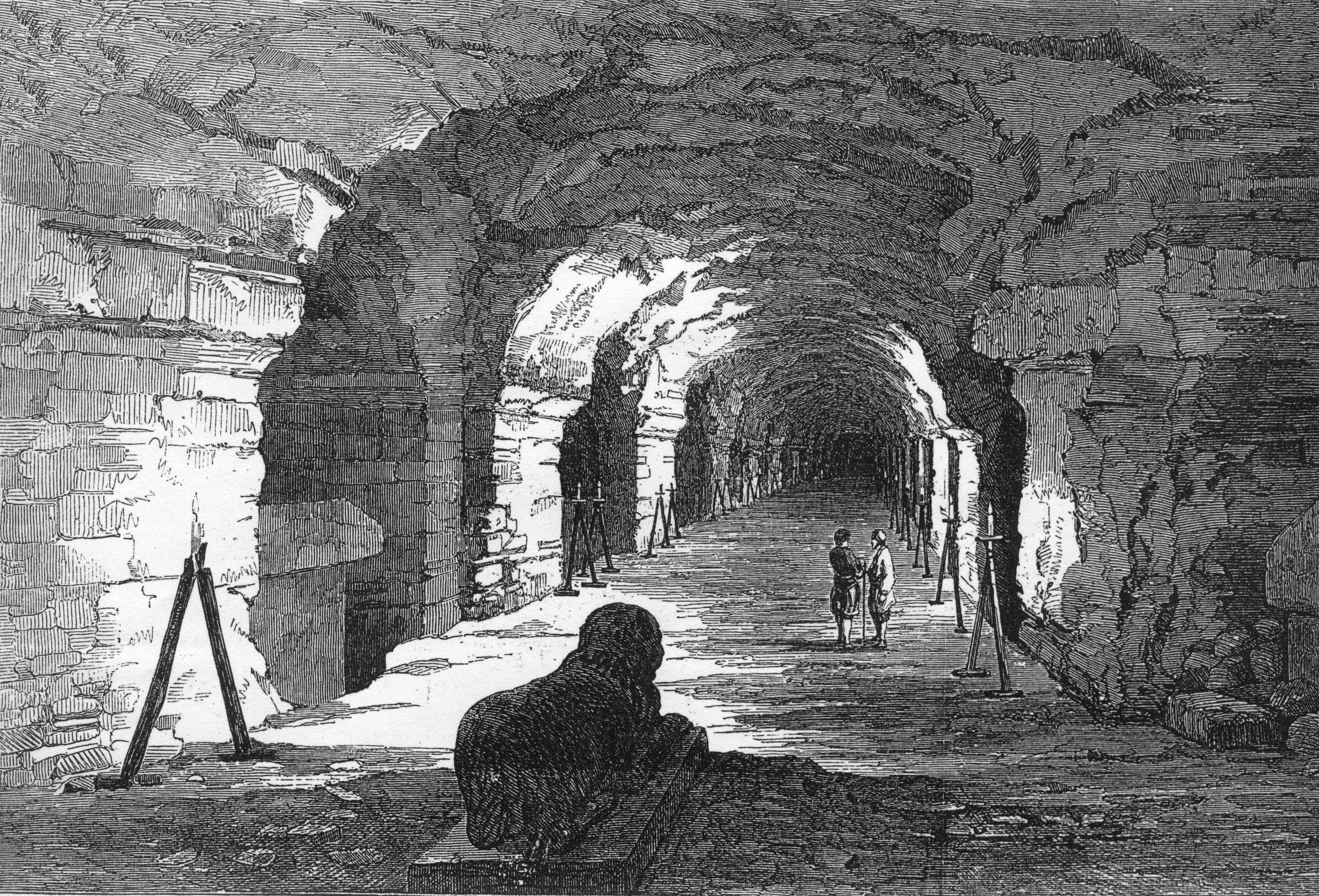
The Serapeum of Saqqara

From the reign of Amenhotep III to the end of the Ptolemaic Period, the Apis bull, the ‘Herald of Ptah’, was buried in a complex of vaults at Saqqara – later known as the Serapeum.

This Monday (9th November) Aidan Dodson explores the history of the Apis burials and their contents with photographs of areas not open to the public!

Everyone welcome to join us – online via Zoom. Lectures are free to MAES members; guests welcome via Eventbrite £5.

Ancient Egyptian Jewellery: What Was Its Purpose?

NEXT MAES ONLINE LECTURE! Monday 12th October

Rosalie David talk on Ancient Egyptian Jewellery: What Was Its Purpose?

This lecture will explore various reasons – religious, social, economic and political – why jewellery was so indispensable to the ancient Egyptians. The lecture will also look at the sources from which the Egyptians obtained the materials used in jewellery-making, and will demonstrate some of the trends that developed over the millennia.

Online lecture via Zoom Doors open 7:30pm Lecture 8 – 9pm

Free to MAES members(Link will be sent out week before)

Guests welcome to sign up via Eventbrite – tickets £5

Art, Sex & Death in Roman Egypt TONIGHT 7:30pm!

Join us for our first online lecture via Zoom, with Campbell Price! Bookings open til 5pm tonight.

https://www.eventbrite.co.uk/e/lecture-campbell-price-art-sex-and-death-in-roman-egypt-tickets-119609131131?aff=ebdssbonlinesearch&fbclid=IwAR3nrTDX9KGIl-_jXCQfAD6BDTmy6do8trKxubnwtfrs6hXsaar2T0BWAos

Art, Sex & Death in Roman Egypt!!!

Monday 14th September – our first online lecture via Zoom.Campbell Price explores “Art, Sex and Death in Roman Egypt”. The lecture is free to attend for members of the Manchester Ancient Egypt Society – membership for the year is just £15. If you’d like to join, visit www.maesweb.org.uk/join-us

We also welcome visitors – if you would like to attend this online lecture, you can book a ticket (£5) here: https://www.eventbrite.co.uk/e/lecture-campbell-price-art-sex-and-death-in-roman-egypt-tickets-119609131131?aff=ebdssbonlinesearch