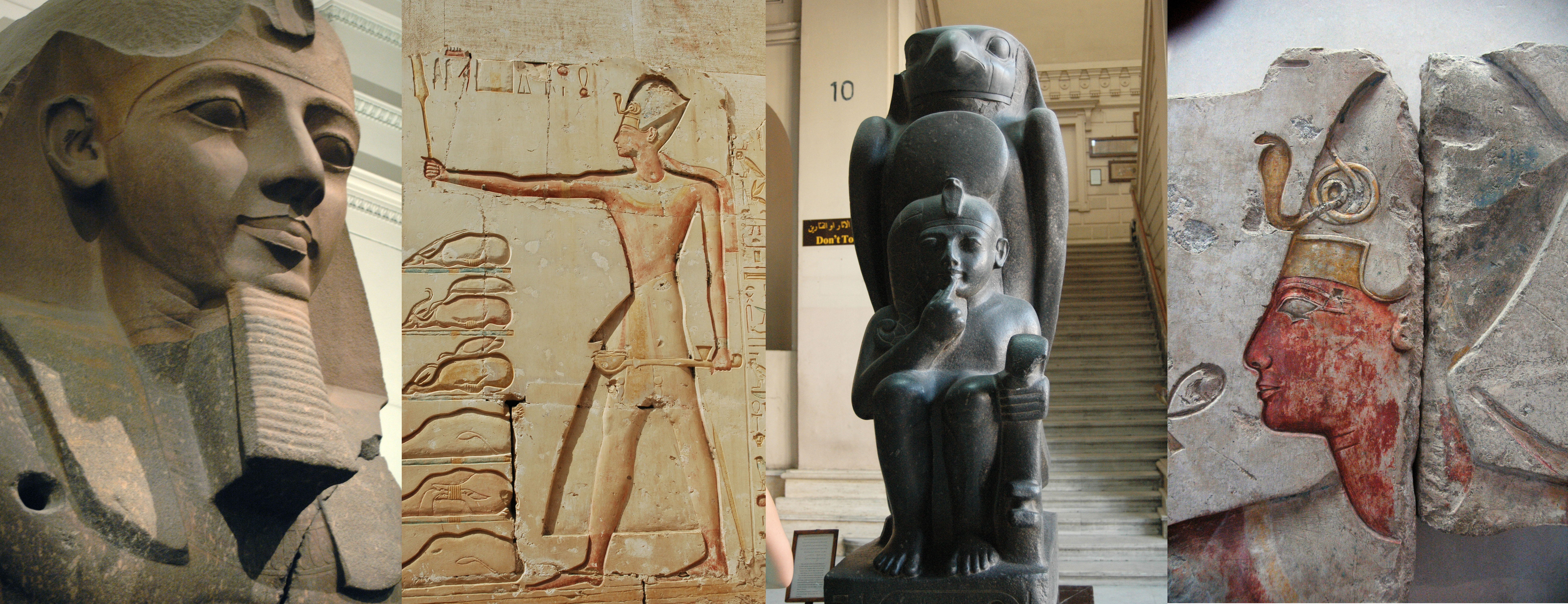
Death in Ancient Egypt!

In our next MAES lecture on Monday 13th February, Alan B Lloyd will be delving deep into the ancient Egyptian afterlife!

The religion of death is by far the best-known aspect of ancient Egyptian civilisation.  It has its beginnings in the Prehistoric period, and aspects of it survived well into the Roman period.  Like all religious systems it embodied two aspects: a belief system and an action system.  The belief system was the driver and was generated by two factors: the concept of the nature of the person and the concept of the nature of life after death.  This body of belief gave rise to a complex system of ritual action which was designed to ensure the continuous survival of the deceased as a fully functioning personality in the afterlife.  The lecture will explore in detail this corpus of belief and action which constituted one of the greatest achievements of Pharaonic culture.

Alan is Professor Emeritus at the Department of History and Classics, Swansea University, and President of the Egypt Exploration Society. He is an authority on the writings of Herodotus and author of “A Companion to Ancient Egypt” and “Ancient Egypt: State and Society”.

Everyone welcome. The lecture begins 8pm on Zoom – free to MAES members who will be sent a link. Guests welcome – booking via Eventbrite here (tickets £5).

New Textile Findings from Deir el-Bahri!

Amandine Merat

Next Monday we kick off the new year with our latest MAES Zoom lecture!

9 Jan 2023 ZOOM Doors open 7:30pm; lecture 8 – 9pm GMT

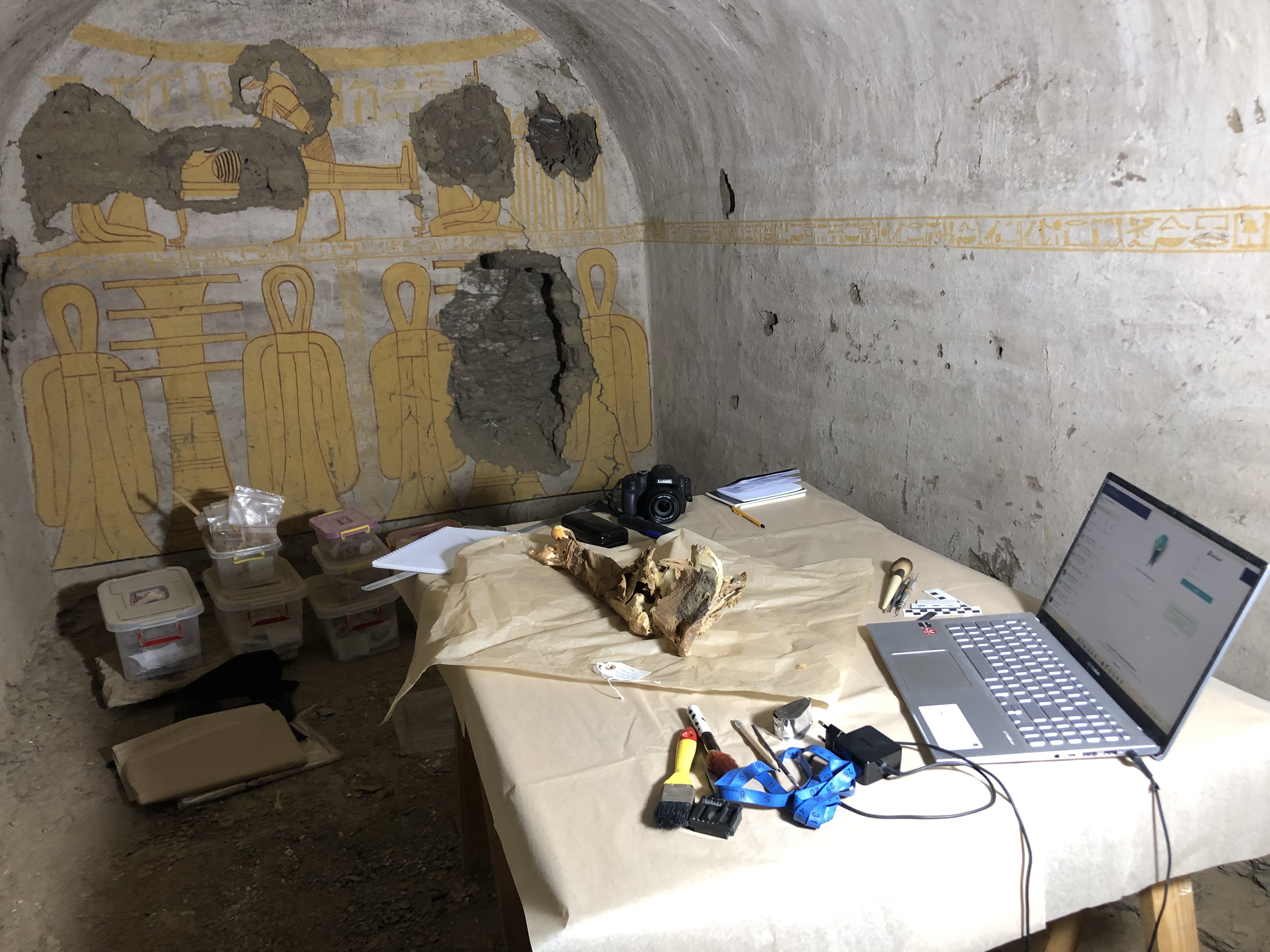
Amandine Merat: The textiles from the Theban Tomb 298 at Deir el-Medina: First Survey and First Observations

During the period 18th – 26th January 2022, the textiles found in the Theban Tomb of Baki (TT298, reign of Sety I) at Deir el-Medinah were studied. The objectives of this first study season were to get an overview and a better understanding of the material discovered in the tomb, its condition, amount and nature, and to make a start with the analyses of a few samples, as part of the preparation of the overall study to take place in the following seasons. Despite a limited time on-site, great discoveries and observations were already made during this first survey, the results of which will be presented here.

Amandine Merat is an Archaeologist and Researcher in Egyptology, with a specialisation in ancient and archaeological textiles. She worked as a curator at the Louvre Museum, the Bode Museum (Berlin) and the British Museum. Now an independent scholar, she works as a textile specialist on varied projects and archaeological sites in Egypt. In January 2022, she joined the IFAO Deir el-Medina team to undertake the study of the textiles found in TT298 (Tomb of Baki).

All welcome! Free for MAES members (who will receive the link via email). Guests can book (£5) on Eventbrite here:

Nobles Tombs of Luxor! MAES meeting tomorrow night

Tomorrow night (Monday 19th December) we welcome Katherine Slinger to give the final zoom meeting of 2022!

All welcome – MAES members will receive a link via email. Guests can book here:       

Katherine Slinger: Tomb Families – Private Tomb Distribution in the New Kingdom Theban Necropolis

The Theban Necropolis contains hundreds of tombs belonging to elite individuals, dating from the end of the Old Kingdom through to the Ptolemaic Period, with the vast majority dating to the New Kingdom (c.1550-1077BC).  These tombs are scattered across the landscape at the edge of the desert between the Valley of the Kings to the west, and the row of royal mortuary temples along the edge of the cultivation to the east. This lecture will focus on New Kingdom private tomb distribution and investigate this apparently random arrangement of tombs by focusing on factors which may have influenced tomb location. GPS surveying has enabled the spatial analysis of these tombs, demonstrating that specific areas of the necropolis were popular at different times and among particular groups of people. Clusters and patterns can be identified between tombs built during the same reign(s), as well as between tomb owners with similar titles and familial connections. The orientation of specific tombs towards Karnak temple, royal mortuary temples and festival processional routes, reveals their significance to certain individuals. This research provides a deeper understanding of the necropolis, and how private tombs linked to the wider sacred landscape of Thebes.  

Dr Katherine Slinger was awarded her PhD in Egyptology from the University of Liverpool in 2020 in Egyptology for her research into the non-royal Theban Necropolis. She graduated with a first-class degree in Egyptology in 2014, and a Master’s degree with Distinction in Egyptology in 2015, both from the University of Liverpool. She is also a qualified primary school teacher. 

Katherine currently works as an Egyptology tutor in the Continuing Education department of the University of Liverpool. She has also lectured in Egyptian Archaeology at the University of Sheffield and Durham University. Her thesis has recently been published as a monograph with Archaeopress. Katherine is also an independent researcher and freelance lecturer.           

STOP PRESS MONDAY MEETING CANCELLED

We are very sorry but we have been forced to cancel the Manchester AE Society lecture meeting at the Pendulum Hotel tomorrow (Monday 12th) due to the poor weather conditions. We will be inviting Colin Reader back to give his lecture in the new year.

Our next meeting will be on Zoom on Monday 19th December with Katherine Slinger giving a lecture on Tomb Families: Private Tomb Distribution in the New Kingdom Theban Necropolis. More details to follow!!!!

Tutankhamun the Extra-terrestrial Connection!!

Our next Manchester Ancient Egypt Society meeting we see the return of a familiar face as Colin Reader comes to give us a fascinating lecture at our central Manchester venue. Everyone welcome!

Monday 12 December VENUE LECTURE     

Colin Reader: Tutankhamun the Extra-terrestrial Connection

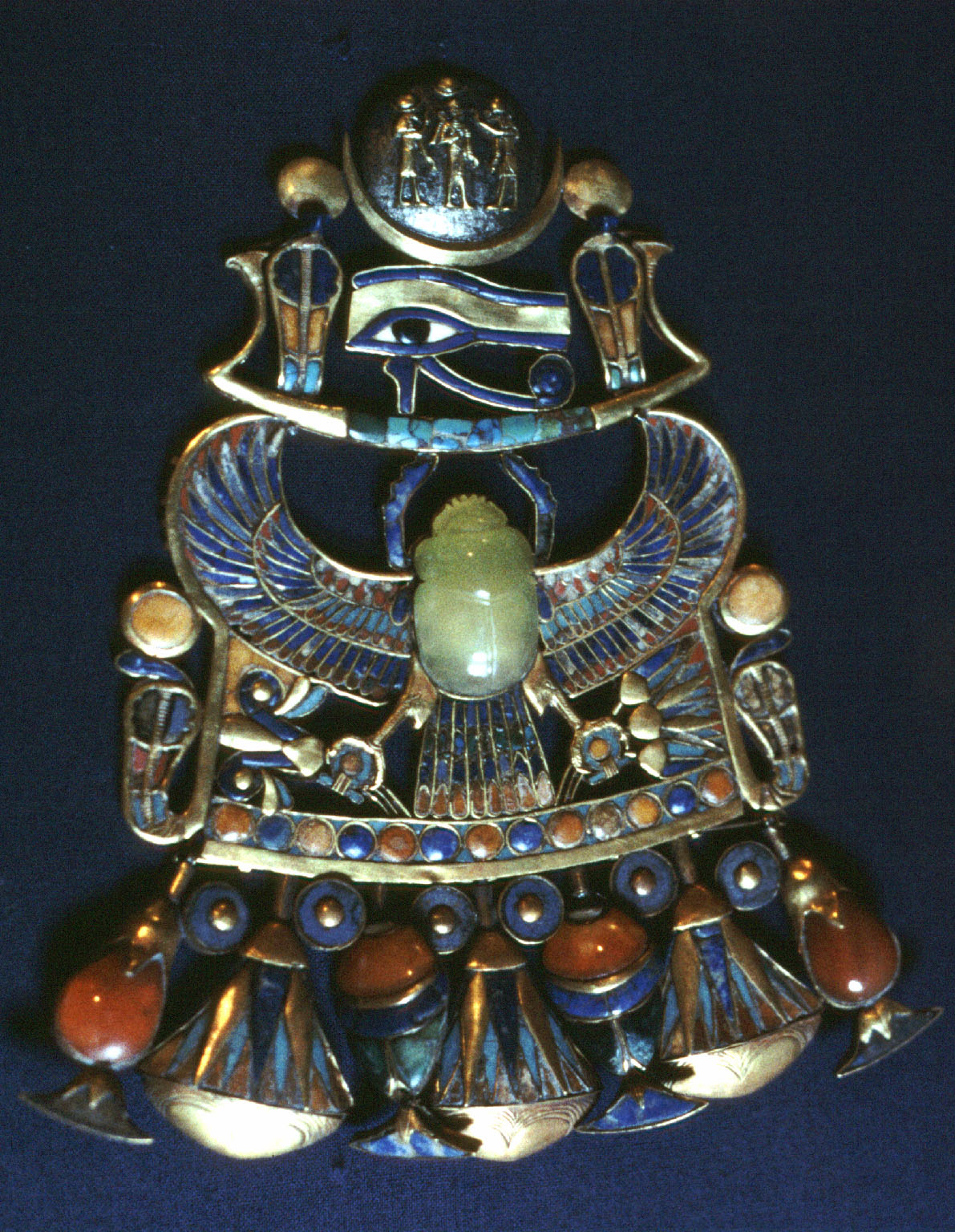
An ornate gold and bejewelled pectoral with a green scarab at its centre was one of the many treasures discovered in 1922 by Howard Carter and his team in Tutankhamun’s famous tomb, KV62. Although perhaps not one of the most celebrated pieces from Tutankhamun’s trove, interest in this piece increased in 1996 when a mineralogist spotted that rather than a piece of relatively ordinary semi-precious stone, the green scarab was carved from a far more exotic material: silica glass.

Although silica glass is relatively well known in Egypt, this is the only known example used in a pharaonic artefact. Generally, silica glass is found in fragments in a remote part of the Western Desert, north of the Gilf Kebir and close to the Libyan border. The mystery is how had this chunk of silica glass found its way to the Nile Valley in the New Kingdom, and why was it so admired by the ancient Egyptians that it was used as a finely carved centrepiece for a prominent item of royal regalia? Surely, neither the royal court nor the craftsmen of New Kingdom Egypt could have known how strange this material really is?

As an engineering geologist and former Chairman of MAES, Colin was first attracted to ancient Egypt as a result of the controversy over the age of the Great Sphinx at Giza and what its weathering and erosion could tell us about its age. Although his ideas on the Early Dynastic origins of the Sphinx are controversial, they have been published in peer reviewed journals and have featured in a number of TV documentaries.

All welcome. Venue: Pendulum Hotel, Sackville Street, Manchester, M1 3BB. Guests £5 on the door; Members £3. Doors open 7pm. Lecture 7:45pm.

Things You Never Knew About Tutankhamun!

Saturday 26th November – join MAES for a special anniversary study day investigating some lesser known aspects about the life and times of Tutankhamun!

Explore the discovery of the tomb through the eyes of the Egyptian media of the time, and through the photographs of Harry Burton in the Griffith Institute archive! Discover what new experimental archaeology findings tell us about Tutankhamun’s textiles and what the latest scientific findings reveal about the health of the king.

Join Rosalie David OBE, Abeer Eladany, Daniella Rosenow and Nancy Hoskins from 9:30am to 4:30pm. All welcome. Visitors £30 booking via Eventbrite here:

A Traveller’s Guide to Egyptian Mythology!

For our next MAES lecture we welcome Garry Shaw who will be taking us on a tour from Aswan to Alexandria studying Egypt’s gods and myths.


In this lecture, we will explore the myths and legends of ancient Egypt while travelling along the Nile from Aswan to Alexandria. As we stop at key locations, we’ll meet the gods and goddesses worshipped there by the ancient Egyptians, learn about their mythology, and see the monuments associated with them. Taking evidence from across Egyptian history, the talk will include famous myths, legends, and stories, and some that are less well known. The talk is based on Shaw’s book: Egyptian Mythology: A Traveller’s Guide from Aswan to Alexandria (Thames & Hudson, 2021).

Garry J. Shaw is an author and journalist covering archaeology, history, and world heritage. He has a PhD in Egyptology and is the author of six books including “The Pharaoh: Life at Court and on Campaign” and “The Egyptian Myths: A Guide to the Ancient Gods and Legends”, with his latest book “The Story of Tutankhamun: An Intimate Life of the Boy who Became King” due in autumn 2022.

Monday 14th November 7:30pm doors open. All welcome!

Free to MAES members. Guests £5 via Eventbrite

MAES Tonight: Campbell Price!

Tonight live at the Pendulum Hotel, we welcome back Campbell Price with a lecture on The Changing Faces of Graeco-Roman Gods!

Under Greek and Roman rule of Egypt, various deities – some very old and others relatively new – took on a range of forms across domestic spaces, temples and in funerary art. In preparation for the arrival of the international touring exhibition ‘Golden Mummies of Egypt’ in Manchester in early 2023, this lecture investigates the iconography of divinity at the end of Pharaonic Period using examples from Manchester Museum’s rich collection and considers how deities were viewed by the living.

Campbell Price is Curator of Egypt and Sudan at Manchester Museum, part of the University of Manchester, and Chair of the Board of Trustees of the Egypt Exploration Society.  He undertook his BA, MA, and PhD in Egyptology at the University of Liverpool, where he is now an Honorary Research Fellow and has carried out fieldwork at Zawiyet Umm el-Rakham, Saqqara and the Egyptian Museum, Cairo.  He has published widely and is the author of “Pocket Museum: Ancient Egypt” published by Thames & Hudson (2018).

All welcome! MAES members £3 on the door (and free tea or coffee); guests welcome £5.

Doors open at 7pm. Lecture 8 to 9pm.

The Pendulum Hotel, Sackville Street, Manchester, M1 3BB.

www.maesweb.org.uk

Tutankhamun Anniversary Study Day!

Tickets now on sale!

Saturday 26th November 2022 Online via Zoom
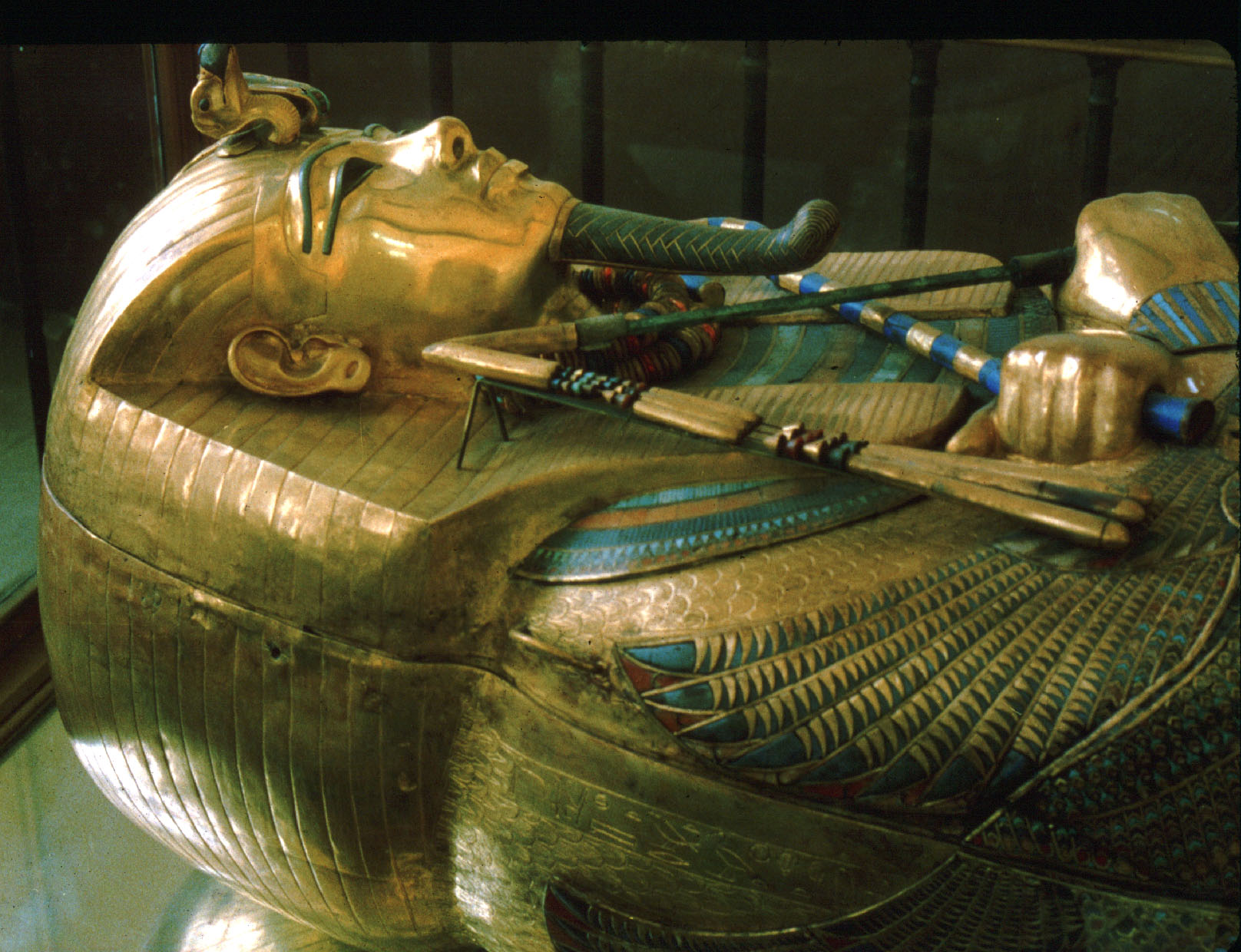
To mark the 100th anniversary of the discovery of the Tomb of Tutankhamun, MAES will be holding a special study day with Rosalie David OBE and guest speakers!

Celebrating the 100th anniversary of the discovery of the Tomb of Tutankhamun with a series of lectures which will explore the discovery through the eyes of the Egyptian media of the time and through the photographs of Harry Burton in the Griffith Institute archive, as well as investigating Tutankhamun’s textiles through experimental archaeology and discussing what the latest scientific findings reveal about the health of the king.

Tickets are available now.

MAES members £20; guests £30.

For more details and how to book click here: