A FISHY TAIL THIS MONDAY!

Our next MAES meeting is on Monday – we hope you can join us!

13 November    ZOOM Hilary Wilson Who Ate all the Fish in Ancient Egypt?

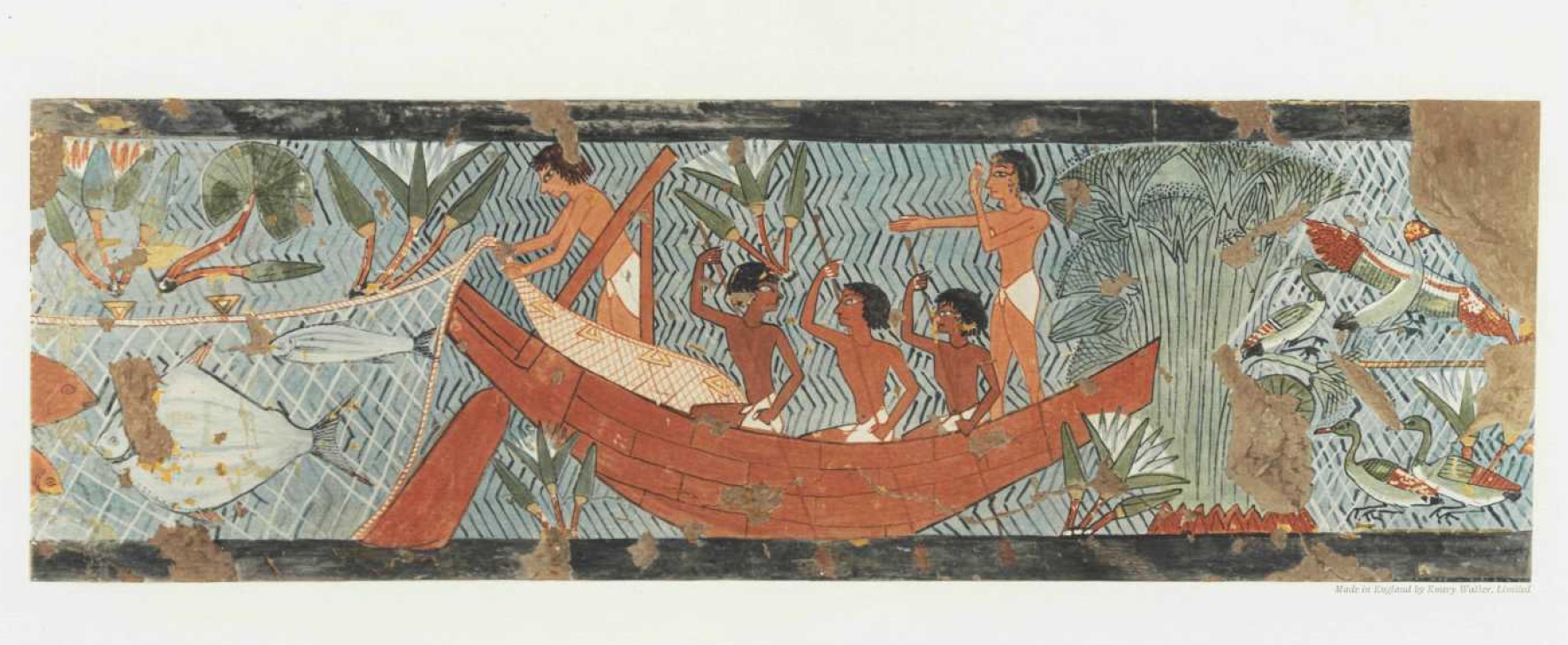
Classical sources suggesting the existence of a taboo on eating fish in ancient Egypt seem to be at odds with the extensive physical remains of fish from Predynastic settlement sites as well as the vivid tomb images of fishing from the Old and Middle Kingdoms. By examining a combination of artistic, literary and modern archaeological evidence, Hilary Wilson re-evaluates traditional interpretations of ancient Egyptian attitudes towards the consumption of fish and demonstrates the dietary and economic importance of fish to different social groups. 

Hilary Wilson is a retired Maths teacher and former Open University lecturer. For many years she ran Adult Education courses in Egyptology for the University of Southampton and for WEA groups across Hampshire. She has written several books on popular Egyptology and is founder Chair of the Southampton Ancient Egypt Society. Hilary was awarded her MA in Egyptology from the University of Manchester in 2022. She is also a staff contributor to Ancient Egypt Magazine.

Free to MAES members. Guests welcome – book via Eventbrite.

MAES ABYDOS STUDY DAY

Saturday 21st October 10.30am– 3.30pm (GMT+1) Via Zoom

An online study day with Stephen Harvey, Campbell Price & Gina Criscenzo-Laycock

       MAES members £19 via booking form; Guests £30 via Eventbrite

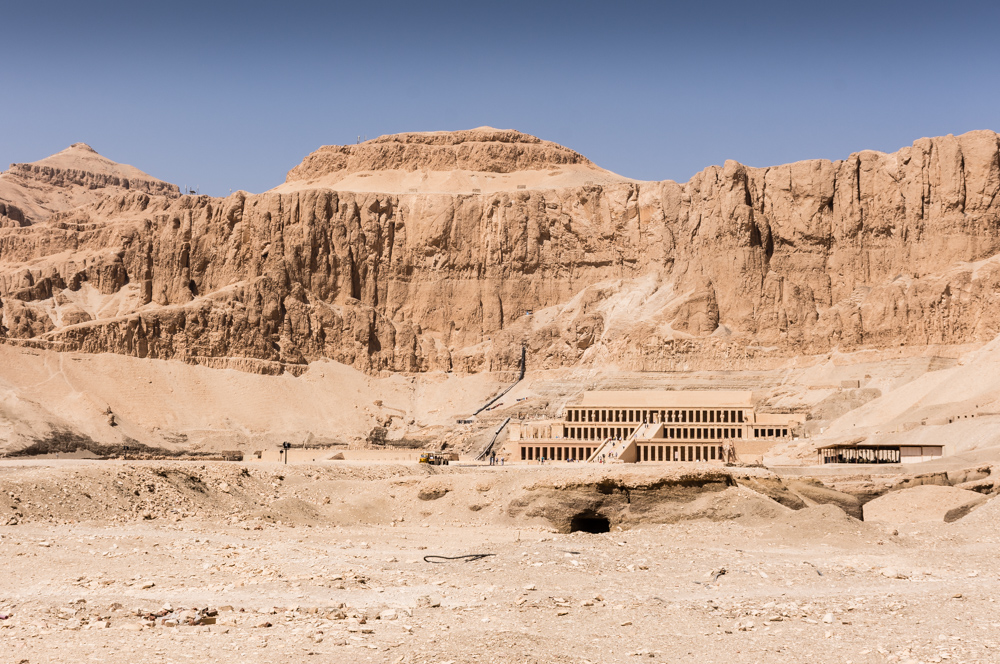
Abydos is one of the most important archaeological areas in Egypt – an ancient cult centre, site of the earliest royal burials, and temples such as the famous Temple of Sety I with its Osirion.

Join Stephen Harvey, Campbell Price and Gina Criscenzo-Laycock as they explore the complex history of the site through the work of the Ahmose and Tetisheri Project, John Garstang and the EES.

All welcome!!!!

MAES: The Twilight Years of A GOD-King

Our October ZOOM meeting looks at the later years of the reign of Ramesses II with Peter J Brand.

In his 34th year as Pharaoh, Ramesses II celebrated his second jubilee, married a Hittite princess and, unbeknownst to him, reached the halfway point of his sixty-seven-year reign. The occasion also signalled an increased emphasis on his status as a living god expressed through temples, statuary, imagery, and literature dedicated to his worship and glorification as Ramesses-the-great-god. As the years rolled on, the king grew older and increasingly frail. Divine kingship became a useful façade behind which the elderly king could be shielded from public view as age and infirmity overcame him. While he continued to reign until the end, in his last years, the crown prince Merenptah ruled in his name. Remarkably, Ramesses II’s mummy has survived as a unique artefact of his reign and tells us more about his humanity than any statue or inscription. From it we know what medical afflictions troubled him over the course of a lifespan that stretched into his late eighties or early nineties. 

Dr Peter J. Brand is a professor in the Department of History at the University of Memphis, USA. He is also a director of the Karnak Hypostyle Hall Project, and specialises in the history and culture of ancient Egypt during its imperial age (c. 1550-1100 BC). He is the author of ‘The Monuments of Seti I and Their Historical Significance’ and ‘Ramesses II, Egypt’s Ultimate Pharaoh’.

MAES ZOOM: The Lighter Side of Egypt!

11 September   ZOOM   Lee Young

The Lighter Side of Egypt with the Art of Lance Thackeray

Lance Thackeray was an English illustrator, known especially for his comic sporting illustrations involving billiards and golf and for his many humorous postcards. When he was over 30 he spent some winters in Egypt and produced humorous sketches which he collected in a book, The Light Side of Egypt (1908). In this lecture we will concentrate on his time in Egypt where he would gently poke fun at the tourists of his time. We will also look at the tourist industry as a whole in Egypt.

Lee Young is an independent researcher and lecturer in Egyptology specialising in artists and epigraphers in Egypt. She has studied the works of Howard Carter and Lance Thackeray (amongst others), and has a particular interest in bringing the greatly overlooked women artists to the public’s attention. Lee worked for several years at the Griffith Institute, part of Oxford University, cataloguing the watercolour paintings held there and doing the same for the Egypt Exploration Society. She also transcribed all 415 letters of Myrtle Broome held by the Griffith and is the author of ‘An Artist in Abydos: The Life and Letters of Myrtle Broome’, published by AUC Press.

MAES NEW SEASON!

Just published – the new provisional Manchester Ancient Egypt Society programme for September 2023 to July 2024! You can take a sneak peak here:

Photo by Chris Marriott

Why not become a MAES member? It costs £20 a year. Members can attend all zoom lectures for free, buy discounted tickets for the two study days, plus receive regular news emails and the Djehuty newsletter. Just visit here to find out more and download a membership form.

All lectures are also open to guests via Eventbrite at £5 each.

We hope to see you in September!

Artistry in glass – egyptian style!

Our final MAES meeting of the season is this Monday on zoom and all are welcome!

Monday 10th July on Zoom – Doors open 7:30pm (GMT+1)

Lucia Gahlin: Ancient Egyptian Artistry in Glass

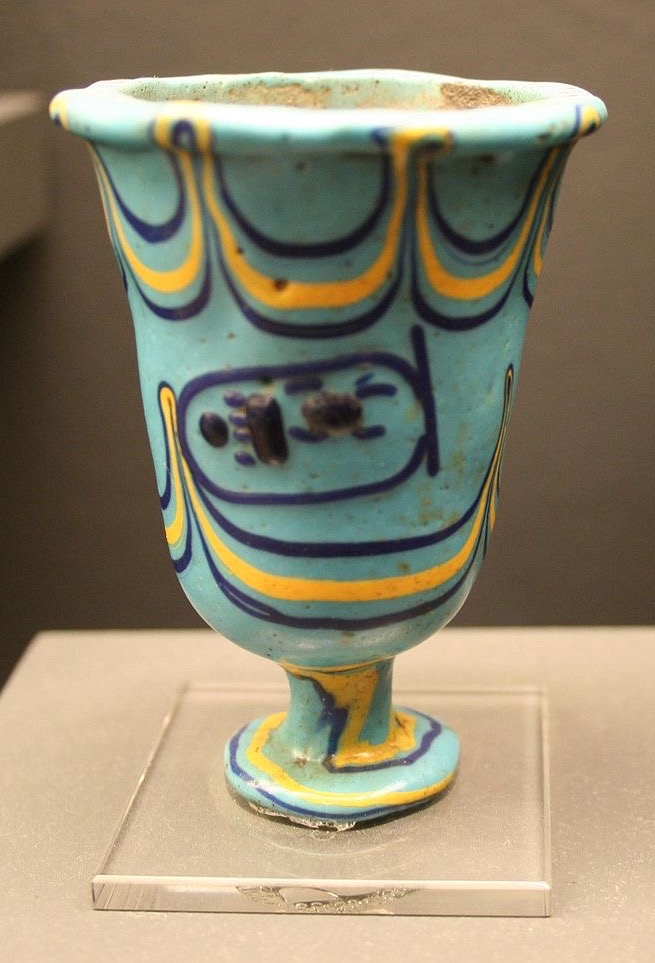
The ancient Egyptians began making glass in the 18th Dynasty (c 1450 BC) following the introduction of the technique from Syria – a result of the great warrior pharaoh Thutmose III’s military campaigns in that part of the ancient world. The Egyptians were soon adept at producing a range of object types in coloured glass. In this lecture Lucia will explore how the ancient Egyptians produced glass objects and the wonderful range of object types, including vessels, inlay, beads, amulets, figures and even headrests. She will examine the developments in glass manufacture from the New Kingdom (15th century BC) through to the Roman Period in Egypt (1st century AD), and will show images of many of the vibrantly coloured glass objects surviving from ancient Egypt.

Lucia’s most recent position has been Honorary Research Associate at University College London’s Institute of Archaeology. She has taught for a number of UK universities including London, Bristol and Exeter. She lectures widely, leads tours to Egypt, and gives guided tours of museums with Egyptian collections. She has worked at the Petrie Museum of Egyptian and Sudanese Archaeology in London, and continues to teach in this museum. She chairs the Friends of the Petrie Museum and is a former Director of Bloomsbury Summer School and Trustee of the Egypt Exploration Society.  She has also worked as Small Finds Registrar at the archaeological site of Tell el-Amarna in Egypt, and is author of books including “Egypt: Gods, Myths and Religion”. 

The lecture is free for MAES members who will receive a link via email. Guests welcome (£5) via Eventbrite. We look forward to seeing you on Monday!

TIYE: THE TERROR OF THE FOREIGN LANDS!

Coming next week – another great Manchester AE Society lecture – open to all!

Free to MAES members. Guests £5 via Eventbrite:

12 Jun 7:45PM MAES ZOOM MEETING        

Robert Morkot: The Great of Terror in the Foreign Lands: The King’s Great Wife, Tiye

In the literature on the Amarna Period, discussion of Tiye has frequently concentrated too much on personal character judgements which are at best described as inappropriate. In more recent years, attention has been focused on the role of Nefertiti, her possible association with Akhenaten as ruler and her undoubted importance from the very earliest years of the reign. Tiye’s importance in many ways anticipates that of Nefertiti: Tiye is the first King’s Great Wife of the New Kingdom to be frequently shown accompanying the king in reliefs and statuary. More importantly, Tiye anticipates Nefertiti in assuming some of the characteristics of kingship and being elevated to divine status alongside Amenhotep III. Temples were built to her in Egypt and in Nubia in which she became a manifestation of the Eye of Re – the goddesses Hathor, Sakhmet and Tefnut.

Robert Morkot is an Ancient Historian with particular interests in north-east Africa, and in the reception of the ancient world and historiography. He has been particularly involved with Egypt, Sudan and Libya, but has a broader involvement in the ancient Eastern Mediterranean/Near East. He gained a BA and PhD from University College London, and worked as Archivist in the Petrie Museum, UCL, becoming a Senior Lecturer in the Department of Archaeology at the University of Exeter. He has held positions on the Board of Trustees of the Egypt Exploration Society, as well as Chair of The Society for Libyan Studies (now BILNAS).He is currently President of the Friends of the Petrie Museum UCL.

RAMESSES ii: PHARAOH OF THE EXODUS?

This Saturday! An Online Study Day with Michael Tunnicliffe & Sarah Griffiths

Ramesses II was one of the greatest and most powerful of the pharaohs. During his 67 year reign he built more temples, erected more colossal statues and sired more children than any other Egyptian king. His inscriptions tell us about his great victories over the enemies of Egypt: the Hittites, the Nubians and the Libyans. He expanded Egypt’s empire, secured the borders and established the first major peace treaty in history. He was revered by later kings, and became the ‘Ozymandias’ of classical legend.

But was Ramesses the pharaoh of the Exodus? Did he enslave the Israelites and suffer the ten plagues of the Bible? Can we believe the king’s propaganda – does Ramesses “the Great” truly live up to his name?

Join Michael Tunnicliffe and Sarah Griffiths as they investigate, using evidence from Biblical and Egyptian sources to explore the life and legacy of Ramesses II.

Saturday 25th March

9.30am– 4.30pm Via Zoom          

MAES members £20 (by booking form)

Guests £30 via Eventbrite www.bit.ly/ManchesterAESocZoom

www.maesweb.org.uk

ANCIENT VOICES THIS MONDAY!

Our next MAES meeting is on Monday 13 March at our usual VENUE!     

Michelle Middleman: Real or Ideal? Ideology Versus Reality in Old Kingdom Tomb Biographies

Old Kingdom tomb biographies were designed to place the tomb owner in the best possible light. Consequently, at first appearance, the content of these biographies, with their formulaic phraseology, seems to give us little more than an idealised version of reality, rather than the real-life everyday experiences. However, things are not always quite as they seem; there are some officials who record unique events, contradict themselves, and subtly stray from the ideology within their biographies. This lecture focuses on the more unusual, idiosyncratic content of the biographies to demonstrate how these examples are glimpses of reality regarding life in the Old Kingdom.

Michelle Middleman has a BA and MA degree in Egyptology and is currently a PhD candidate at the University of Liverpool. She specialises in Old Kingdom tomb biographies and social life in the Old Kingdom.

Everyone welcome £3 members on the door (with a free tea or coffee voucher) and £5 for guests. Pendulum Hotel, Sackville Street, Manchester, M1 3BB. Parking in Charles Street multistory.

Doors open – whenever you wish to arrive! We’ll be there from 7 and we kick off at 7:45pm

Tutankhamun: the Extra-Terrestrial Connection!

This Monday Colin Reader brings a strange tale of pharaohs and outer space!!!!!

An ornate gold and bejewelled pectoral with a green scarab at its centre was one of the many treasures discovered in 1922 by Howard Carter and his team in Tutankhamun’s famous tomb, KV62. Although perhaps not one of the most celebrated pieces from Tutankhamun’s trove, interest in this piece increased in 1996 when a mineralogist spotted that rather than a piece of relatively ordinary semi-precious stone, the green scarab was carved from a far more exotic material: silica glass.

Although silica glass is relatively well known in Egypt, this is the only known example used in a pharaonic artefact. Generally, silica glass is found in fragments in a remote part of the Western Desert, north of the Gilf Kebir and close to the Libyan border. The mystery is how had this chunk of silica glass found its way to the Nile Valley in the New Kingdom, and why was it so admired by the ancient Egyptians that it was used as a finely carved centrepiece for a prominent item of royal regalia? Surely, neither the royal court nor the craftsmen of New Kingdom Egypt could have known how strange this material really is?

As an engineering geologist and former Chairman of MAES, Colin was first attracted to ancient Egypt as a result of the controversy over the age of the Great Sphinx at Giza and what its weathering and erosion could tell us about its age. Although his ideas on the Early Dynastic origins of the Sphinx are controversial, they have been published in peer reviewed journals and have featured in a number of TV documentaries. Colin’s initial interest in the Sphinx led him to research wider issues associated with the geology of Egypt and during the COVID lockdown, he wrote a book focussing on what the geology and landscape of Egypt meant for the people of the Nile Valley.  The book is planned for publication in October 2022 and elements of today’s talk have been taken from the manuscript.

All welcome! Monday 27th February at the Pendulum Hotel, Sackville Street, Manchester, M1 3BB.

Doors open 7:30pm; lecture 8pm. Members £3, Guests £5 on the door. Parking round the corner in the Charles Street Multi-story.