After 1177 BCE: The Survival of Civilizations

Our next MAES meeting will be on 14th April with the welcome return of Eric Cline who will be exploring what happened following the Late Bronze Age collapse.

All welcome! Free to MAES members. Guests welcome £5 via Eventbrite here:

The centuries following the Late Bronze Age Collapse, from 1176 to 776 BCE, was a time of rebirth and resilience — less of a Dark Age and more of a reboot for many of the civilizations in the Aegean and Eastern Mediterranean. There are stories of resilience and transformation, but also of failure to thrive or even survive. In this lecture, we will focus on the people and places that emerged from the ashes, highlighting some of the events and developments that took place in Greece, Egypt, Mesopotamia, Anatolia, and the Levant, including the establishment of the kingdoms of Israel and Judah. We will end at the time of the first Olympic Games, one of the signs marking the date of the recovery of Greece. We will also consider whether there are any relevant lessons to be learned from this dramatic story of resurgence and revival, especially considering what is going on in our world today.

THE DRAGON ROARS! WHY WALES & ANCIENT EGYPT?

Manchester AE Society are holding a special online zoom study day on Saturday 22 March which is exploring the unusual links between Wales and Egypt!

Alan Lloyd explores why so many Egyptologists are Welsh in origin

Rosalie David investigates some amazing connections between pharaonic and Welsh Medieval medicine and looks at Sir John Gardner Wilkinson’s association with Wales.

Ken Griffin explores the treasure trove of ancient Egyptian objects held in Welsh collections.

Not to be missed! MAES members £15 via booking form (emailed to you).

Guests welcome £25 via Eventbrite

Isis and the Seven Scorpions: a cautionary tale?

Our next MAES meeting is on Monday 10th March – welcoming back Penny Wilson! Doors open 7:30pm (GMT) and the lecture beings at 8pm.

All welcome – free to members (who will receive an email link). Guests pay £5 via Eventbrite


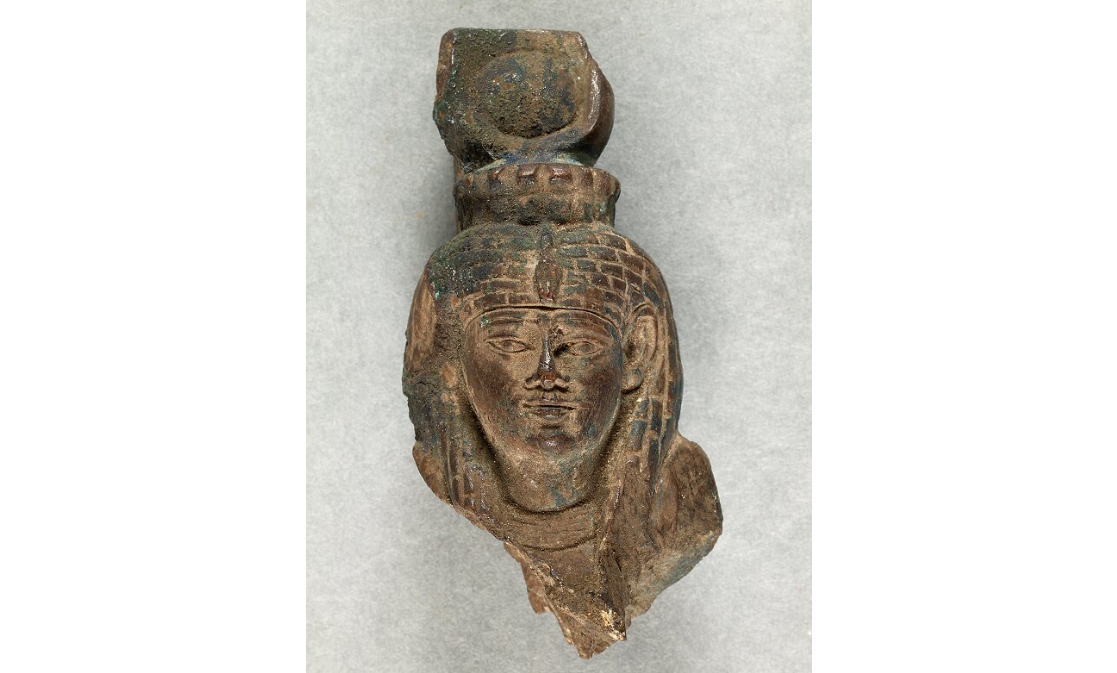
The Magical-Healing statues from New Kingdom Egypt and onward contain a wealth of texts to provide the precedents for magical power that could be harnessed to heal people from illnesses and, in particular, poisonous bites and stings. This talk will look at the cycle of Isis and the Scorpions with its links to Isis as a scorpion herself, the threat to Horus the child from the venomous companions of Seth, the dangers of not recognising the gods, and how you can protect yourself from dangerous beasties.

Penny Wilson is Associate Professor of Egyptian Archaeology in the Dept. Archaeology at Durham University where she has worked for the last 20 years and before then she was Assistant Keeper in the Dept. Antiquities, Fitzwilliam Museum, Cambridge. She studied at Liverpool University, where she completed her PhD, now published as ‘A Ptolemaic Lexikon’. She is currently Director of the Delta Survey Project for the Egypt Exploration Society and field director of the Royal City of Sais Project. Her interests include religious life in Ancient Egypt, settlement archaeology and the Late Period to Late Antique Nile Delta. Her publications include field reports on the Sais excavations, and Delta survey work as well as ‘Sacred Signs’ an introduction to the role of hieroglyphs in ancient Egypt.

RECENT EXCAVATIONS AT DEIR EL-BAHRI!

Deir el-Bahri by M. Jawornicki

This Monday we are pleased to present Patryk Chudzik who will be speaking about The history of Deir el-Bahri in light of recent excavations at the Hathor Cult Complex of Hatshepsut Temple.

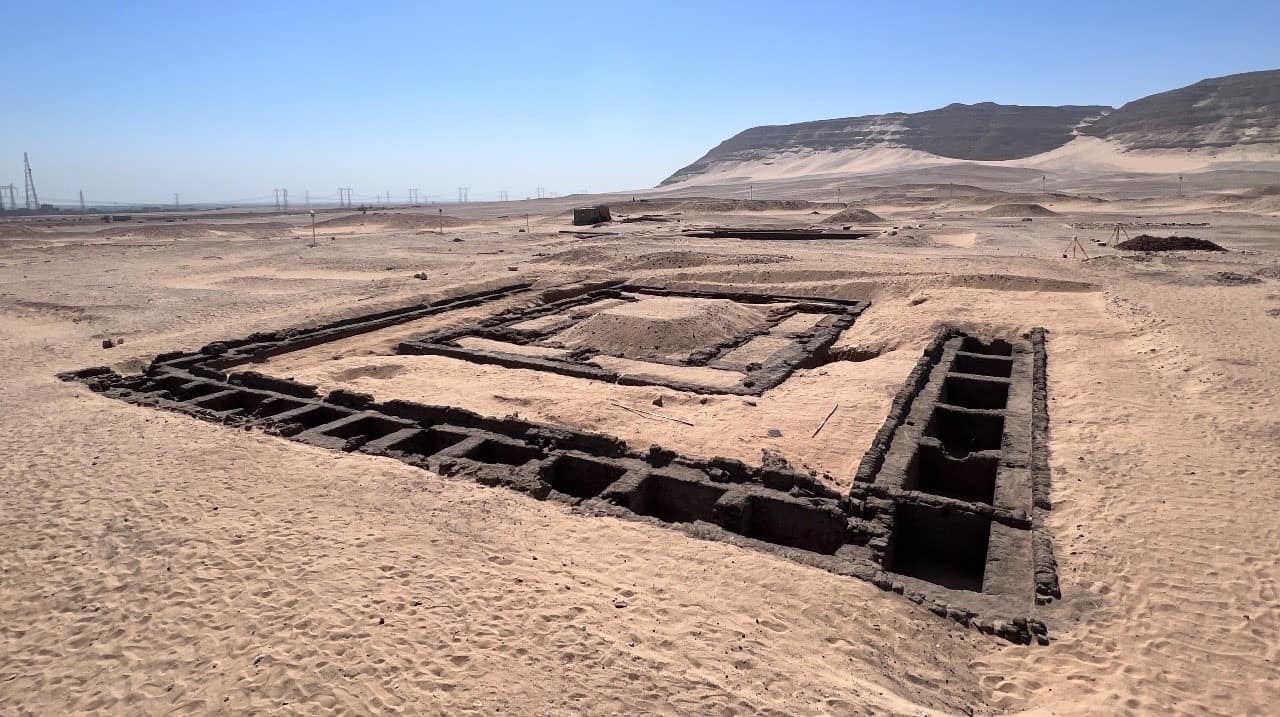
The great rock amphitheatre of Deir el-Bahri was one of the most significant sacred areas of the Theban necropolis since at least the Middle Kingdom. Dominated by the three terraced temples built by Mentuhotep II, Hatshepsut and Thutmose III, the site was the cult centre of the goddess Hathor and the destination of the Beautiful Feast of the Valley – the most important annual festival of the Theban region. In the shadow of the monumental royal buildings, a necropolis developed for more than two thousand years, where members of the royal family, priests and priestesses were buried. This lecture will explore the transformation of the sacred space of Deir el-Bahri over the centuries, and present its most significant milestones through the lens of the results of the author’s latest excavations carried out at the Hathor Cult Complex on the south side of Hatshepsut’s temple. This lecture will open with the story of the tomb of an enigmatic prince, son of the founder of the Middle Kingdom, who was also instrumental in the construction of the temple of Hatshepsut, and will conclude with a presentation of a hitherto unknown part of the necropolis of the Roman elite.

Dr Patryk Chudzik is an Assistant Professor at the Polish Centre of Mediterranean Archaeology of the University of Warsaw. He studied Prehistory, as well as Oriental and Classical Archaeology at the universities in Poznań and Wrocław. He received his PhD on the topography and architecture of the Theban necropolis in the Middle Kingdom (2017). He is the director of the Polish-Egyptian archaeological and conservation expedition to Deir el-Bahri and the co-director of the Polish Archaeological Expedition to North Asasif.

Kinglists and the Writing of Egyptian History

This Monday we kick off the New Year with a lecture from Chris Naunton! Everyone welcome. Free to MAES members – you’ll receive an email link. Guests welcome – £5 via Eventbrite

13 January Chris Naunton

Kinglists and the Writing of Egyptian History

‘Dynasties’ form the backbone of ancient Egyptian history. We’re all familiar with dating people, events and objects to this or that Dynasty, and we know that the 18th was ‘great’ era, or, say, the 29th rather more obscure. Each Dynasty seems to have represented a coherent group of pharaohs – perhaps they were all related, or came from the same part of Egypt. And the end of one Dynasty and start of the next marked a clear change. Or did it? The archaeological evidence does not always support the idea. And would the ancient Egyptians have recognised the idea of these Dynasties? Maybe, or maybe not… It was the historian Manetho, writing in the early Ptolemaic Period who arranged Egyptian history this way; his system was adopted in modern times and now we’re stuck with it – warts and all. This lecture looks at Manetho’s history, the Aegyptiaca, how it sometimes seems remarkably close to the archaeological evidence, and at other times miles off. And we look at the Egyptians’ earlier records of their own history in the form of kinglists in particular.

Chris Naunton is an Egyptologist and author of several books including ‘Searching for the Lost Tombs of Egypt’ (2018) and ‘Egyptologists’ Notebooks’ (2020), and is currently making a meal of writing another one on ‘Dynasties’. He regularly appears in television documentaries on ancient Egypt, and lectures around the UK, overseas and online. He was Director (CEO) of the Egypt Exploration Society from 2012 to 2016, and President of the International Association of Egyptologists from 2015 to 2019, and is now Director of the Robert Anderson Trust.

From Ancient Trash to Historical Treasure

From Ancient Trash to Historical Treasure: What the Oxyrhynchus Papyri can tell us about the ordinary folk of Ptolemaic, Roman and late-antique Egypt

It is fitting that the Oxyrhynchus Papyri were found under big mounds of earth underground, because in this talk we take these texts to ‘ground level’, with an overview of these fascinating texts and their history but also, a look at the ordinary and seemingly mundane amongst them to provide some insightful portraits of the people who produced these pieces.  From mortgage deeds to schoolboy exercises, from sales records to horoscopes, and from private letters to magical spells; you will be left with a sense of familiarity with the hopes, fears, frustrations, joys, and dreams of ordinary people striving to live their lives in late ancient Egypt.

Richard J. Britton is an author and independent scholar. His research is focused on the ancient world of the New Testament and the many other Near Eastern traditions and texts. He is employed as a Probation Officer in his day job and is also an ordained Elder and Lay Preacher in the United Reformed Church.

All welcome. Doors open 7:30pm GMT. The lecture runs from 8 to 9pm. Free to MAES members (who will receive an email link). Guests welcome to join us for £5 via Eventbrite here:

Before two things were: Creation in Ancient Egypt

Hi everyone! Another great Manchester Ancient Egypt Society lecture lined up for you this Monday!

11 November Michael Tunnicliffe

As in other ancient cultures such as Greece and Israel, there was not just one ‘creation Story’ in ancient Egypt. Rather each major temple claimed its god as the original Creator deity, and they told stories of how things came to be ‘in the beginning’. Often in comparison with the philosophies of Greece, or the sweep of Genesis 1, the Egyptian “myths” are seen as primitive, stories for children. Yet in their own way they are as deep and philosophical as any in the ancient world and as intriguing as the Big Bang story told by modern cosmologists. This lecture will examine four of the accounts, and try to get behind the complex theological arguments portrayed in story form.

Michael Tunnicliffe is a freelance tutor in Adult Education. He holds degrees in Theology from the Universities of Birmingham and Cambridge and completed the Certificate in Egyptology at Manchester.  He is a long term member of MAES, and served for 6 years on the committee.

This is an online lecture – doors open 7:30pm (GMT) and the lecture begins at 8pm. Free to MAES members (you will receive an email link). Guests welcome (£5) via Eventbrite.

the treasures of tanis and archaising art – the third intermediate period

Manchester Ancient Egypt Society’s online study day this Saturday!

Join us as we explore the lesser known Third Intermediate Period – 400 years of politically divided rule following the end of the Ramesside kings – a period that saw significant developments in culture, in art and in religion.

Discover the ‘Treasures of Tanis’, find out how the ancient Egyptians communicated with the gods, explore the wonderful archaising ‘art’ of the Libyan and Kushite periods, and discover how Psamtek I reunified Egypt, ushering in the rule of the Twenty-sixth Dynasty.

Everyone welcome – booking essential.

Saturday 26th October 9:30am – 4:30pm (GMT+1) Via Zoom      

MAES members £19 (via form emailed to you; Guests £30 via Eventbrite

God is his potter! disability in ancient Egypt

“God is his Potter”: Disability in Ancient Egypt

Today, disability is broadly understood to be a category that applies to people with a wide array of complex health conditions and impairments, which also has many complex layers of social and cultural interaction. Many of these conditions and impairments have been around as long as humanity itself. So how did Ancient Egypt, one of the world’s oldest societies, recognise and react to individuals that we would today call disabled? In this talk, Kyle Lewis Jordan will provide an insight into new and rapidly developing studies in this area, sharing his own reflections as a disabled archaeologist and curator, and the reasons why he believes deeper studies of disability in the ancient past are integral to fully appreciating the richness of the tapestry that is humankind.

Kyle Lewis Jordan is an early career archaeologist and curator who specialises in the study of disability in antiquity, with a particular focus on Ancient Egypt and the Middle East. Upon completing his studies at UCL, Kyle went on to work as a curator for the Ashmolean Museum and Pitt Rivers Museum in Oxford, where he curated two displays based on his research. He is currently curating a temporary exhibition for the Verulanium Museum in St. Albans on health and disability in the Roman world. Born with Cerebral Palsy, Kyle has been passionate about Egyptology since the age of six, and has had the lifelong ambition of being Director of the British Museum since he was ten.

Free to MAES members (you’ll receive an email link). Guests welcome via Eventbrite

Doors open 7:30pm (GMT+1) and the lecture begins at 8pm. See you there!

A glimpse of Egypt in the third intermediate period!

Manchester Ancient Egypt Society’s online study day in October!

We have an exciting online study day lined up in October, exploring the lesser known Third Intermediate Period – 400 years of politically divided rule following the end of the Ramesside kings – a period that saw significant developments in culture, in art and in religion.

Discover the ‘Treasures of Tanis’, find out how the ancient Egyptians communicated with the gods, explore the wonderful archaising ‘art’ of the Libyan and Kushite periods, and discover how Psamtek I reunified Egypt, ushering in the rule of the Twenty-sixth Dynasty.

Everyone welcome – booking essential.

Saturday 26th October 9:30am – 4:30pm (GMT+1) Via Zoom      

MAES members £19 (via form emailed to you; Guests £30 via Eventbrite