The Victorian Quest for Ancient Egypt

For our last lecture of the season, the Manchester Ancient Egypt Society is please to welcome our newly appointed President – Rosalie David OBE – who will be taking us on a Victorian journey through inscriptions, archaeology and palaeopathology!
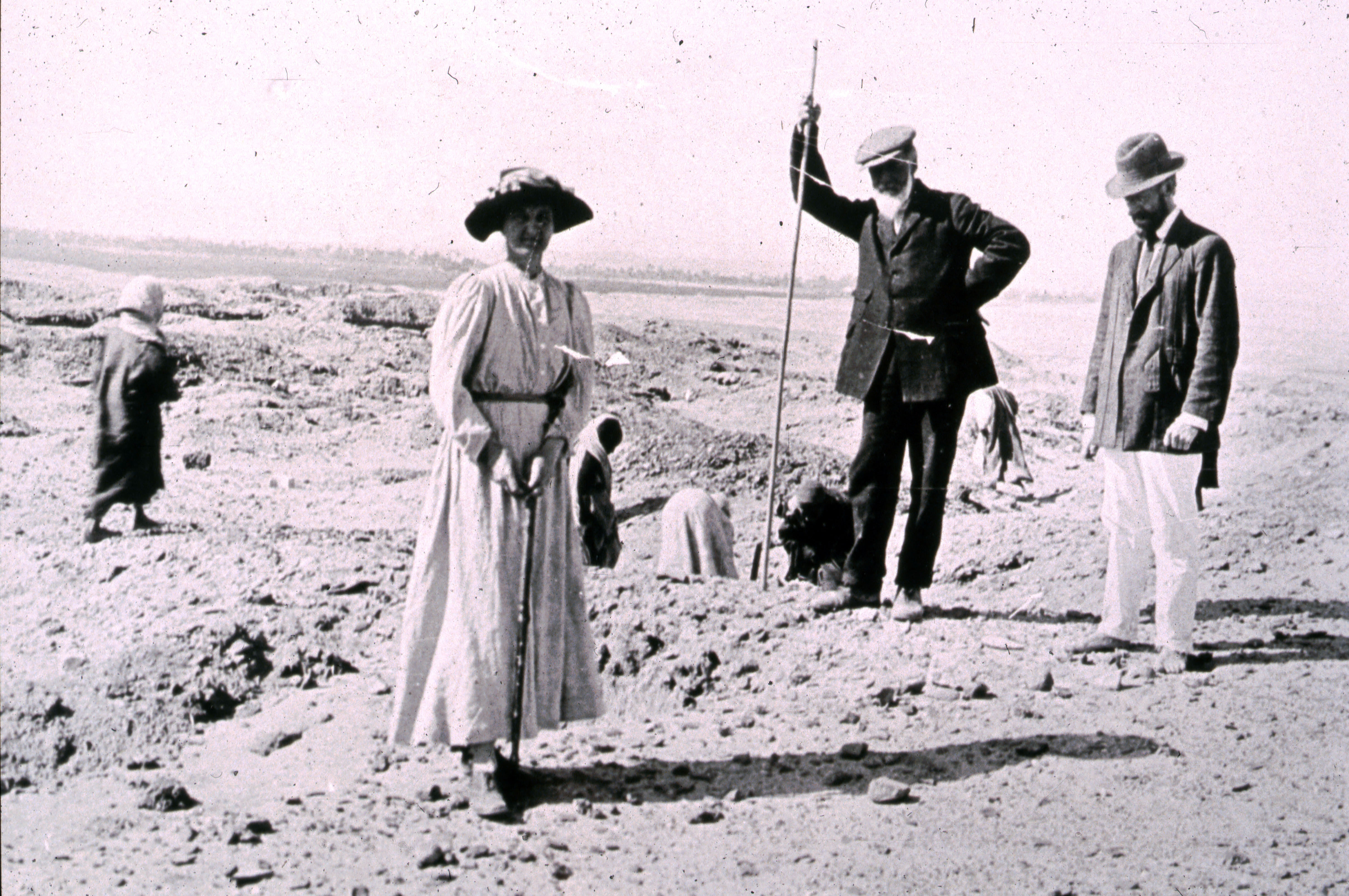
Many developments In British Egyptology have been inspired by the Victorians’ early interest in the subject – largely resulting from the rise of an affluent middle-class who enthusiastically pursued leisure reading and foreign travel, as well as membership of newly established learned societies. This specific interest in ancient Egypt was prompted by a desire to shed new light on Biblical accounts, inspired in part by the emergence of Protestant non-conformism. This generated support for archaeological expeditions to excavate sites presumed to have links with the Bible. In parallel, a growing curiosity about science, medicine and the history of disease provided the impetus for scientific studies on human remains, associated with the ‘mummy unrollings’ that reached their peak in Victorian times. 

This lecture will consider some key developments from Victorian times down to the present day, focusing on discoveries related to language and literary studies; archaeological exploration; and palaeopathological research on mummified and skeletal remains. Concepts and practices developed over the past two hundred years which reflect the availability of new technology and changing social attitudes and perceptions will be considered, demonstrating how these strands have combined to form the basis of current Egyptology.  This lecture is dedicated to the late Chair of MAES, Robert B Partridge.

Professor Rosalie David O.B.E., F.R.S.A is Emerita Professor of Egyptology and former Director of the KNH Centre for Biomedical Egyptology at The University of Manchester. She is also an Honorary Research Associate at The McDonald Institute for Archaeological Research, University of Cambridge, and a Vice-President of The Egypt Exploration Society. She was awarded the O.B.E. for services to Egyptology in the 2003 New Year Honours List.  Her research involves the use of biomedical/scientific techniques to study ancient Egyptian mummified remains to enhance knowledge of pharaonic medicine and pharmacy.

All welcome. Free to MAES members (you will receive an email link shortly) and guests can book here via Eventbrite (£5).

Doors open 7:30pm GMT+1 and the lecture begins at 8pm.

RECENT EXCAVATIONS AT DEIR EL-BAHRI!

Deir el-Bahri by M. Jawornicki

This Monday we are pleased to present Patryk Chudzik who will be speaking about The history of Deir el-Bahri in light of recent excavations at the Hathor Cult Complex of Hatshepsut Temple.

The great rock amphitheatre of Deir el-Bahri was one of the most significant sacred areas of the Theban necropolis since at least the Middle Kingdom. Dominated by the three terraced temples built by Mentuhotep II, Hatshepsut and Thutmose III, the site was the cult centre of the goddess Hathor and the destination of the Beautiful Feast of the Valley – the most important annual festival of the Theban region. In the shadow of the monumental royal buildings, a necropolis developed for more than two thousand years, where members of the royal family, priests and priestesses were buried. This lecture will explore the transformation of the sacred space of Deir el-Bahri over the centuries, and present its most significant milestones through the lens of the results of the author’s latest excavations carried out at the Hathor Cult Complex on the south side of Hatshepsut’s temple. This lecture will open with the story of the tomb of an enigmatic prince, son of the founder of the Middle Kingdom, who was also instrumental in the construction of the temple of Hatshepsut, and will conclude with a presentation of a hitherto unknown part of the necropolis of the Roman elite.

Dr Patryk Chudzik is an Assistant Professor at the Polish Centre of Mediterranean Archaeology of the University of Warsaw. He studied Prehistory, as well as Oriental and Classical Archaeology at the universities in Poznań and Wrocław. He received his PhD on the topography and architecture of the Theban necropolis in the Middle Kingdom (2017). He is the director of the Polish-Egyptian archaeological and conservation expedition to Deir el-Bahri and the co-director of the Polish Archaeological Expedition to North Asasif.

the treasures of tanis and archaising art – the third intermediate period

Manchester Ancient Egypt Society’s online study day this Saturday!

Join us as we explore the lesser known Third Intermediate Period – 400 years of politically divided rule following the end of the Ramesside kings – a period that saw significant developments in culture, in art and in religion.

Discover the ‘Treasures of Tanis’, find out how the ancient Egyptians communicated with the gods, explore the wonderful archaising ‘art’ of the Libyan and Kushite periods, and discover how Psamtek I reunified Egypt, ushering in the rule of the Twenty-sixth Dynasty.

Everyone welcome – booking essential.

Saturday 26th October 9:30am – 4:30pm (GMT+1) Via Zoom      

MAES members £19 (via form emailed to you; Guests £30 via Eventbrite

A glimpse of Egypt in the third intermediate period!

Manchester Ancient Egypt Society’s online study day in October!

We have an exciting online study day lined up in October, exploring the lesser known Third Intermediate Period – 400 years of politically divided rule following the end of the Ramesside kings – a period that saw significant developments in culture, in art and in religion.

Discover the ‘Treasures of Tanis’, find out how the ancient Egyptians communicated with the gods, explore the wonderful archaising ‘art’ of the Libyan and Kushite periods, and discover how Psamtek I reunified Egypt, ushering in the rule of the Twenty-sixth Dynasty.

Everyone welcome – booking essential.

Saturday 26th October 9:30am – 4:30pm (GMT+1) Via Zoom      

MAES members £19 (via form emailed to you; Guests £30 via Eventbrite